Technical Guide

Welcome to the DampFlex Gas Spring Knowledge Center.
At DampFlex, we specialize in high-quality automotive and industrial gas springs, providing reliable solutions for your applications.
Our goal is to help engineers, designers, and technical buyers select the right gas spring for every project—whether it’s for precise force, correct dimensions, optimal rod diameter, or proper mounting.
Explore our guides and technical insights to ensure safety, performance, and long service life for your systems.

1️⃣Gas Spring Basics

A gas spring is a mechanical device that uses compressed gas to provide a controlled force for lifting, lowering, or positioning applications.
Key parameters of a gas spring include:
– Force (N): the pushing or lifting strength
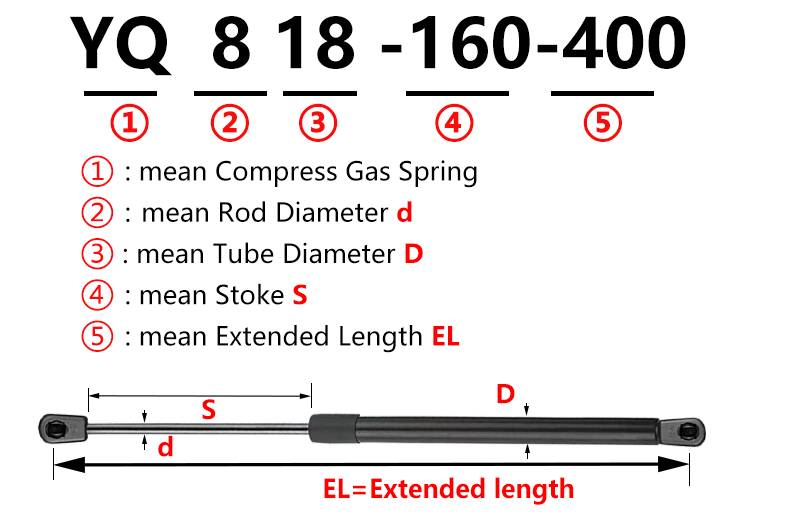
– Extended Length (EL):the length from mounting hole center to mounting hole center when fully extended
– Stroke: the distance the rod travels during compression
– Rod Diameter: affects stability and load capacity
– Tube Diameter: affects internal pressure and durability
Understanding these basics is essential for selecting the right gas spring for your application.

2️⃣How to Choose Gas Spring Force

Introduction

Choosing the correct gas spring force is one of the most critical steps when selecting a gas strut.
If the force is too low, the object will not lift. If it is too high, it may be difficult or unsafe to close.

This guide explains how to calculate and select the proper force (measured in Newtons, N) for automotive and other applications.

What Is Gas Spring Force?

Gas spring force refers to the output force generated by the compressed gas inside the cylinder.
It is typically measured in Newtons (N).  10N is approximately equal to 1 kg.

Common examples:

  • 10-80N → Micro gas springs

  • 100N → Light cabinet doors

  • 200–400N → Furniture applications (beds, storage lids)

  • 300–500N → Automotive trunk or hood struts

  • 800-1500N → Heavy Machinery

Key Factors That Affect Force Selection

Choosing the correct force depends on several factors:

1. Weight of the Object

The heavier the object, the higher the required force.

Examples:

  • Cabinet door: 2–5 kg

  • Storage bed: 15–40 kg

  • Car trunk lid: 10–25 kg


2. Mounting Position

Force requirement changes depending on installation angle and position.

  • Vertical installation → Less force required

  • Horizontal installation → More force required

  • Offset mounting → Changes leverage

👉 This is one of the most common reasons for incorrect selection.


3. Distance from Hinge (Leverage)

The closer the gas spring is installed to the hinge, the higher force is needed.

  • Short distance → Higher force

  • Longer distance → Lower force


4. Opening Angle

Larger opening angles require more force to maintain stable support.


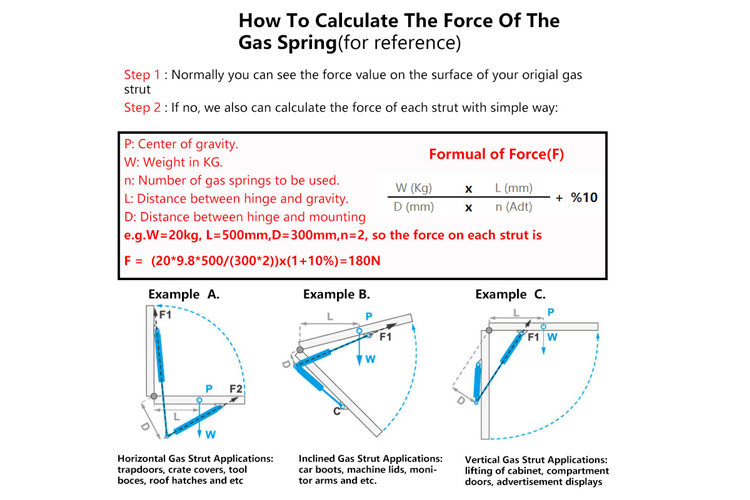
Basic Force Calculation Formula

A simplified formula used in many applications:

Force (N) = (Weight × Gravity × Distance to center of gravity) ÷ Mounting distance

Where:

  • Weight in kg

  • Gravity ≈ 9.8 m/s²

👉 In real applications, a safety factor is usually added.


Practical Selection Method (Recommended)

Instead of relying only on formulas, most professionals use this approach:

Step 1: Estimate weight of the lid/door

Step 2: Determine mounting positions

Step 3: Choose initial force range

Step 4: Test and adjust

👉 For most projects, testing is essential to get the best performance.


Common Mistakes to Avoid

❌ Choosing force based only on weight

Ignoring installation geometry leads to wrong results.

❌ Using too much force

  • Hard to close

  • May damage hinges

❌ Ignoring temperature effects

Gas spring force can change slightly in extreme temperatures.


Typical Force Reference Table

ApplicationRecommended Force
Small cabinet door80–150 N
Kitchen cabinet100–200 N
Storage bed300–800 N
Car trunk400–700 N
Car hood500–900 N

👉 These values are for reference only and may vary by design.


When You Need Custom Gas Springs

Standard force may not always fit your application.

You may need customization when:

  • Unique installation geometry

  • Special load requirements

  • OEM replacement projects

  • European vehicle compatibility


Conclusion

Selecting the correct gas spring force requires considering weight, mounting position, and leverage—not just a single parameter.

A proper selection ensures:

  • Smooth operation

  • Longer product lifespan

  • Better user experience


Need Help Choosing the Right Gas Spring?

If you are unsure about the correct force or need OEM/ODM solutions, feel free to contact us.

We can support:

  • Force calculation

  • Drawing confirmation

  • Custom production

3️⃣How to Measure Gas Spring​

Introduction

Choosing the correct gas spring is not only about force — length is equally critical.
Incorrect length can lead to:

  • Improper installation

  • Limited opening angle

  • Excessive stress on mounting points

  • Early product failure

In this guide, I’ll show you how to measure gas spring length correctly and avoid common mistakes.


1. Key Terms You Must Know

Before measuring, you need to understand two basic dimensions:

Extended Length (Center-to-Center)

The total length of the gas spring when fully extended, measured from the center of one end fitting to the center of the other.

Stroke Length

The distance the rod travels from fully compressed to fully extended.

👉 Formula:
Stroke = Extended Length – Compressed Length


2. How to Measure Gas Spring Length

Step 1: Fully Extend the Gas Spring

Make sure the gas spring is in its fully extended position.

⚠️ Do NOT measure when compressed.


Step 2: Measure Center-to-Center Distance

Measure from:

  • Center of one ball joint (or fitting)
    👉 to

  • Center of the opposite fitting

👉 This is your Extended Length


Step 3: Measure Compressed Length

Compress the gas spring (carefully), then measure again:

  • Center to center distance

👉 This gives you the Compressed Length


Step 4: Calculate Stroke

Stroke = Extended Length – Compressed Length
 

3. Example

  • Extended Length: 400 mm

  • Compressed Length: 240 mm

👉 Stroke = 160 mm


4. Common Mistakes (Very Important)

❌ Measuring End-to-End Instead of Center-to-Center

This leads to wrong installation dimensions.


❌ Ignoring End Fittings

Different fittings (ball joint, eyelet, fork) affect total length.


❌ Measuring While Installed

Angles and mounting positions can distort measurements.

👉 Always measure the gas spring separately if possible


5. Special Notes for Automotive vs Furniture

Automotive Gas Springs

  • Usually exact match required (OEM standard)

  • Even small deviation can cause installation failure


Furniture Gas Springs

  • More flexible

  • But still requires correct stroke and length for smooth operation


6. Pro Tip from Manufacturer

If you cannot measure precisely, just provide:

  • Photos of the installed gas spring

  • Application (car model / cabinet / bed)

  • Approximate opening angle

👉 A professional supplier can help you determine the correct size.


Conclusion

Correct length measurement ensures:

  • Proper fit

  • Smooth operation

  • Longer service life

If you’re unsure, it’s always better to confirm before ordering rather than replacing later.


🔧 Need Help?

We support:

  • OEM replacement matching

  • Custom gas spring sizing

  • Technical selection guidance

👉 Feel free to reach out.

4️⃣How to Select Tube/Rod Diameter

Introduction

When selecting a gas spring, many people focus on force and length, but overlook another critical factor:

 Tube and rod diameter

Choosing the wrong diameter can result in:

  • Poor stability

  • Reduced service life

  • Oil leakage or seal failure

  • Insufficient load capacity

In this guide, we’ll explain how to select the right tube and rod size for your application.


1. What Do Tube and Rod Diameter Affect?

Rod Diameter

The rod plays a key role in:

  • Stability during movement

  • Resistance to side loads

  • Service life of the gas spring


Tube Diameter

The tube determines:

  • Internal gas volume

  • Pressure capacity

  • Overall durability

 In simple terms:

  • Rod = strength & stability

  • Tube = power & durability


2. Rod Diameter Selection Guide

Rod diameter is critical for avoiding bending and ensuring smooth operation.

Typical Ranges:

  • 4–6 mm

    • game pedal, car refrigerator

    • Light equipment, electronic components

    • Micro stroke

  • 6–8 mm

    • Light-duty applications

    • Small cabinets, lids

    • Short stroke

  • 8–10 mm

    • Medium-duty applications

    • Automotive hood and trunk

    • Most common size

  • 10–12 mm

    • Heavy-duty applications

    • Industrial equipment

    • High load or long stroke


Key Considerations:

  •  Load weight
  • Installation angle
  • Side force (very important)
  • Frequency of use

👉Higher side load = need thicker rod


3. Tube Diameter Selection Guide

Tube diameter works together with rod size and force requirements.

Typical Ranges:

  • 12–15 mm
    • Light applications
    • Micro force, mini stroke
  • 15–18 mm

    • Light applications

    • Lower force range

  • 18–22 mm

    • Standard automotive & furniture

    • Balanced performance

  • 22–28 mm

    • Heavy-duty / industrial

    • High force requirements


Key Considerations:

  • Required force (N)
  • Stroke length
  • Operating pressure
  • Expected lifetime

👉 Higher force = larger tube needed


4. Matching Tube & Rod Diameter (Important)

Tube and rod are not selected independently.

Typical combinations:

  • 15/6 → Light duty

  • 18/8 → Standard furniture

  • 22/10 → Automotive

  • 28/14 → Heavy industrial

👉A mismatch can cause:

  • Seal wear

  • Instability

  • Reduced lifespan


5. Common Mistakes

 ❌Choosing Based on Force Only

Ignoring diameter leads to early failure.


❌Undersized Rod

May bend under side load.


❌Oversized Design

Unnecessary cost increase.


❌Ignoring Usage Conditions

High-frequency or angled installations require stronger structures.


6. Application Differences

Automotive Gas Springs

  • Typically standardized sizes

  • Must match OEM specifications


Furniture Gas Springs

  • More flexibility

  • Cost-performance balance is key


Industrial Applications

  • Require heavy-duty design

  • Larger diameters for durability


7. Pro Tip from Manufacturer

If you are unsure, provide:

  • Load weight

  • Stroke length

  • Installation position

  • Usage frequency

👉A professional supplier can recommend the correct combination quickly.


Conclusion

Selecting the right tube and rod diameter ensures:

  • Stability

  • Safety

  • Longer service life

👉It’s not just about force — structure matters just as much.


 Need Help?

We support:

  • Custom sizing

  • OEM matching

  • Technical consultation

👉Feel free to contact us.

5️⃣How to Choose End Fitting

Introduction

Choosing the correct end fittings and installation method is critical for safe, reliable, and long-lasting operation of gas springs.
Even with the correct force, length, and rod/tube diameter, improper fittings can cause:

  • Binding or jamming

  • Premature wear

  • Reduced service life

  • Potential failure

In this guide, we’ll explain how to select the right end fittings and mounting orientation.


1. Common Types of End Fittings

Gas springs come with various end fittings depending on application. The most common types include:

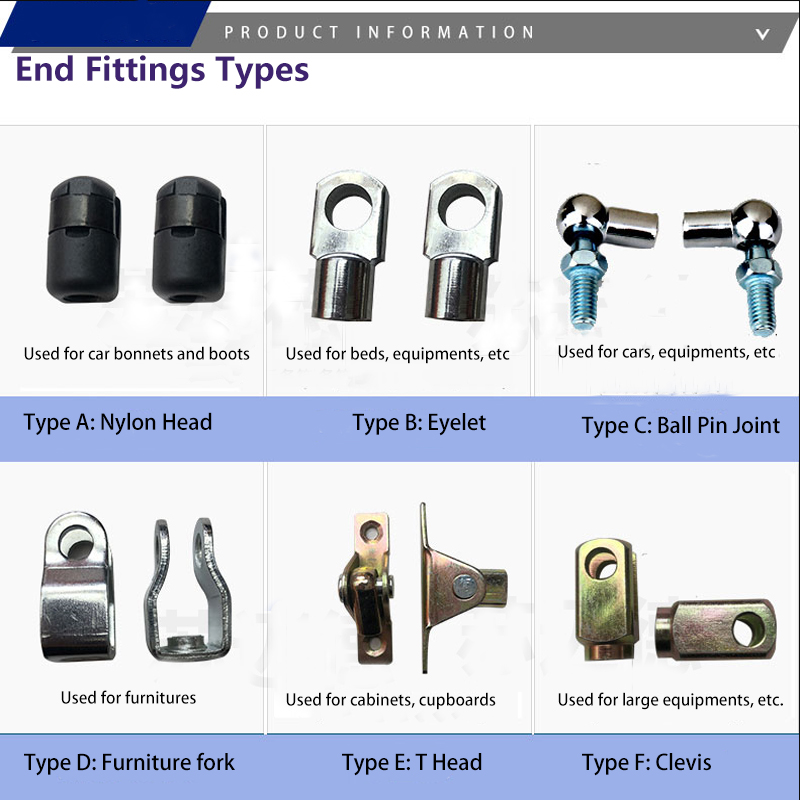
Fitting TypeDescriptionTypical Application
Ball JointProvides pivoting movementAutomotive hoods, trunk lids
EyeletCircular loop for bolt connectionFurniture, light industrial
Clevis (Fork)Fork-style connectionIndustrial machinery, heavier loads
Bracket MountingFixed bracket attachmentCabinets, equipment panels

2. Key Points When Choosing Fittings

1️⃣ Rod Down Orientation

  • Generally recommended for longer life

  • Ensures proper lubrication of internal seals

  • Minimizes leakage risk


2️⃣ Avoid Side Loads

  • Side loads reduce stability and cause premature wear

  • Ensure the load acts along the rod’s axis


3️⃣ Allow for Correct Pivot Angles

  • Each fitting has an ideal pivot range

  • Avoid over-rotation that causes bending or binding


4️⃣ Consider Application Requirements

  • Load weight

  • Stroke length

  • Frequency of use

  • Environmental conditions


3. Installation Best Practices

  • Always mount gas springs according to manufacturer guidelines

  • Ensure pivot points are properly aligned

  • Check for any interference or obstacles along the motion path

  • Regularly inspect mounting brackets and fittings for wear

Proper installation prevents:

  • Binding

  • Excessive wear

  • Potential operational failure


4. Pro Tip from Manufacturer

If you are unsure which fitting to choose:

  • Share photos of your current installation

  • Indicate load, stroke, and orientation

  • Include pivot angle or mounting constraints

A professional supplier can recommend the optimal fitting for safety and longevity.


Conclusion

End fittings are not just accessories — they are essential to safe and reliable gas spring operation.
Choosing the right type and orientation ensures:

  • Smooth pivoting

  • Reduced wear

  • Long service life

Even a perfectly sized gas spring can fail without proper fittings.


🔧 Need Help?

We provide:

  • Custom fitting recommendations

  • OEM / ODM mounting solutions

  • Technical consultation

👉 Feel free to contact us for guidance.

6️⃣Gas Spring Installation Guide

Introduction

A correctly installed gas spring is crucial for safety, smooth operation, and long service life.
Even if you have the right force, length, diameter, and fittings, improper installation can lead to:

  • Binding or jamming

  • Premature wear

  • Seal damage or leakage

  • Potential accidents

This guide covers step-by-step installation best practices.


1. Preparation Before Installation

1️⃣ Check the Gas Spring

  • Confirm force, length, rod/tube diameter, and fittings match your application

  • Inspect for any visible damage

  • Ensure rod is clean and lubricated if recommended by the manufacturer


2️⃣ Review Mounting Points

  • Ensure brackets or attachment points are strong enough for the expected load

  • Check alignment and pivot positions

  • Make sure there are no obstacles along the motion path


3️⃣ Orientation Matters

  • Rod down orientation is usually recommended

    • Keeps the seals lubricated

    • Reduces leakage risk

  • Avoid side loading

  • Ensure pivot angles allow full stroke without binding


2. Installation Steps

Step 1: Position the Gas Spring

  • Align the gas spring with the intended motion path

  • Confirm the rod can fully compress and extend without obstruction


Step 2: Attach End Fittings

  • Use the correct fittings (ball joint, eyelet, clevis, or bracket)

  • Ensure bolts, pins, or screws are tightened to manufacturer specifications

  • Verify pivot angles are within recommended range


Step 3: Secure Mounting Points

  • Double-check bracket and hinge strength

  • Ensure no wobble or misalignment


Step 4: Test the Operation

  • Slowly extend and compress the gas spring

  • Look for binding, unusual noises, or uneven movement

  • Adjust pivot points if necessary


3. Common Installation Mistakes

  • Wrong orientation → premature wear and leakage

  • Side loads → bending or instability

  • Incorrect pivot angles → binding or limited stroke

  • Loose fittings → failure under load

  • Improperly rated spring → over-compression or excessive force


4. Automotive vs Furniture Applications

Automotive:

  • Often OEM replacement, precise fit is required

  • Installation instructions usually provided in manuals

Furniture:

  • More flexibility, but correct pivot angles and orientation still critical

  • Use adjustable brackets when possible


5. Maintenance Tips

  • Regularly inspect mounting points and fittings

  • Check for leaks or unusual movement

  • Replace worn or damaged springs immediately


6. Pro Tip from Manufacturer

  • If unsure about installation, provide photos or short videos to your supplier

  • Professional advice can prevent costly mistakes and extend service life


Conclusion

Proper gas spring installation ensures:

  • Smooth operation

  • Longer service life

  • Safety for users and equipment

Even the best-selected gas spring will fail if installed incorrectly. Follow these guidelines for reliable performance.


🔧 Need Help?

We support:

  • Installation guidance for OEM and custom applications

  • Technical consultation

  • Troubleshooting for existing installations

👉 Contact us for expert support.

Automotive Gas Struts

How to Choose Correct Gas Struts If I Have OE Number

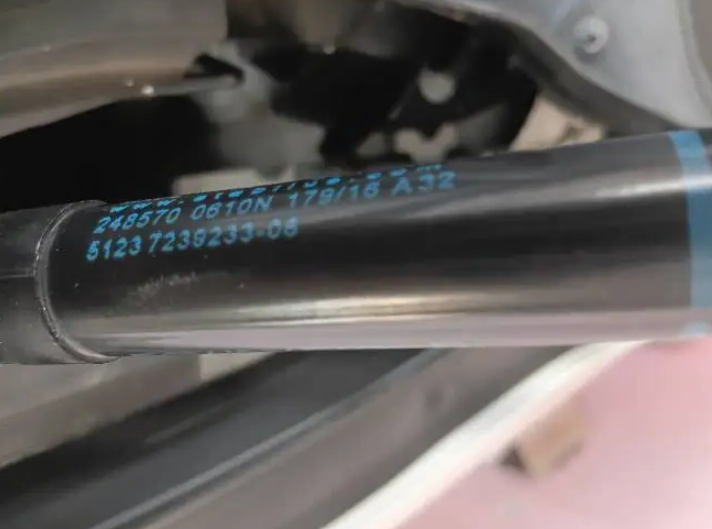
The OE (Original Equipment) number for car lift supports is a unique manufacturer-specific part number, such as 4B9827552N (Audi/VW), 51 23 8 402 551 (BMW), or 7L1Z-7842105-A (Ford), stamped directly on the metal cylinder of the gas strut. Finding this number is crucial for finding an exact replacement.
Normally you can easily find it in your original struts of your car. With it, you can provide it to the sellers, they will find correct size and force

How to Choose Correct Gas Struts If I Don't Have OE Number

If your original gas struts are already replaced before, so sometimes you could not find correct OE number. To ensure you get correct size and type, you need provide two parameters

– Your car brand, car model and installation location (hood or trunk)

– EL, Stroke and Force (Force is not mandatory because it is not easy to get the value)

Model compatibility

Introduction

Automotive gas struts are essential for hoods, trunks, tailgates, and liftgates.
However, selecting the correct gas strut is not universal — every car model has specific dimensions, force, and fittings. Choosing the wrong strut can lead to:

  • Improper opening or closing

  • Safety hazards

  • Premature wear or failure

  • Customer dissatisfaction

This guide explains how to ensure model compatibility for automotive gas struts.


1. Why Model Compatibility Matters

Automotive gas struts vary by:

  • Length (extended and compressed)

  • Force / pressure

  • Tube and rod diameter

  • End fittings (ball joint, eyelet, clevis)

  • Mounting position and angle

Even a slight mismatch can cause binding, misalignment, or overloading.


2. Key Parameters for Model Matching

1️⃣ Extended Length

  • Distance between mounting points when fully extended

  • Must match the specific car model for proper hood/trunk operation

2️⃣ Compressed Length

  • Distance when the strut is fully compressed

  • Incorrect compressed length → strut may bottom out or not fully open

3️⃣ Force / Pressure

  • Lifts the hood or trunk with enough stability

  • Force too low → hood may close suddenly

  • Force too high → difficult to open

4️⃣ Rod & Tube Diameter

  • Impacts durability, stability, and load capacity

  • Larger diameter → higher load or longer stroke

5️⃣ End Fittings

  • Ball joint, eyelet, clevis, or bracket

  • Must match original mounting points


3. How to Check Model Compatibility

  1. OEM Part Number Reference

    • Use the original part number from the vehicle manual

    • Compare dimensions and force ratings

  2. Direct Measurement

    • Measure extended/compressed length, rod/tube diameter, and end fittings

    • Cross-check with supplier specifications

  3. Database / Catalog

    • Use manufacturer or supplier compatibility tables

    • Check year, model, trim, and hood/trunk type

  4. Supplier Consultation

    • Provide photos, measurements, and part numbers

    • Experienced suppliers can recommend the correct strut quickly


4. Common Mistakes

  • ❌ Using “one-size-fits-all” struts

  • ❌ Ignoring OEM force specifications

  • ❌ Using incorrect end fittings

  • ❌ Neglecting mounting angle or position


5. Best Practices for B2B Buyers

  • Maintain a compatibility database for your main brands/models

  • Verify force, length, and fitting before ordering

  • Always test on sample vehicles if possible

  • Communicate exact OEM part numbers with suppliers


6. Pro Tip from Manufacturer

We recommend creating a simple table for each vehicle model with:

  • Vehicle make & model

  • Year

  • OEM part number

  • Required length & force

  • End fitting type

This saves time, avoids errors, and builds professional credibility with clients.


Conclusion

Model compatibility is critical for automotive gas struts.
Even a high-quality strut will fail or cause safety issues if it does not match the vehicle model.
By checking length, force, diameter, and fittings, you ensure reliable operation and customer satisfaction.


🔧 Need Help?

We provide:

  • Automotive gas strut OEM & aftermarket compatibility

  • Custom recommendations for European, Asian, and other markets

  • Technical consultation and database support

👉 Contact us for professional guidance.

Furniture Gas Springs

Cabinet Gas Spring Selection

Bed Lift Mechanism

Soft Close vs Normal

Other Applications

Industrial:

– Enclosures
– Machine covers
– Toolboxes

– Mini/Micro

– Stainless

FAQ

Q: Can I replace a single gas spring only?
A: Yes, but ensure the replacement matches the force and size specifications of the paired spring.


Q: What happens if the force is too high?
A: It may damage the lid, hinge, or surrounding components and pose safety risks.


Q: How do I calculate force for a new application?
A: Measure load, pivot point, and angle. Use the formula: Required Force = Load × Geometry Factor × Safety Factor.


Q: Can I customize gas spring force or size?
A: Yes, DampFlex provides custom solutions based on your technical requirements.


Q: Common mistakes

A:
– Selecting force without considering EL and stroke
– Ignoring temperature effects
– Incorrect rod diameter for application load
– Using wrong end fittings or mounting orientation
– Replacing gas springs without recalculating specifications

Q: If provide assistance Selecting the Right Gas Spring
A: Yes, our engineering team is ready to help you select the ideal gas spring for your application. Provide your application details and we’ll guide you to the optimal solution.